You Don’t Need To Be An Alcoholic To Quit Drinking
Getting Over the Social Stigma around Sobriety
It’s 2016, and I’m just a few months into my thirties when I find myself staring at a Google search bar. My fingers hover tentatively over the keyboard, preparing to take one of the many quizzes designed to help determine if you have a problem with alcohol. I answer the questions one by one and wait for the results to appear on my screen. When they do, I let out a huge sigh of relief. The quiz confirms what I had already suspected: my name is Amanda, and I’m not an alcoholic.
Even though this was the anticipated outcome, I furrow my brow in confusion. If I’m not an alcoholic, why do I have this nagging feeling that I should quit drinking? It’s perplexing because, as far as I know, people who don’t have a problem with alcohol don’t just quit drinking . . . do they? Further, how did I, an average, run-of-the-mill social drinker, end up here, pondering what it would be like to pursue a life of sobriety at the ripe age of thirty? I feel like a weirdo for even considering it.
Breaking up with booze doesn’t make sense. I have no real reason to question my relationship with alcohol . . . it is by no means ruining my life. In fact, from the outside looking in, my life looks pretty rad. I have a great job, a cute apartment, and a nice car; I’m physically fit and have an active social schedule. Yet I can’t shake the feeling that alcohol has outworn its welcome in my life.
When I take a serious look at my drinking, I conclude that my relationship with alcohol has been rather unremarkable. There have been no rock bottoms or ruined relationships. I haven’t caused myself physical harm or put my job in jeopardy. I’m not drinking alone, neglecting my responsibilities, or fitting any of the stereotypes they tell you to look for in problem drinkers. I’m also not drinking any more than my peers, who, by the way, also appear to be kicking ass at life. Although I go out frequently, my drinking has not led me down the path of drugs. Alcohol is my one vice, and a socially acceptable one at that.
I’ve been able to confirm time and time again that my drinking is normal. I’ve even gone so far as to ask my therapist if she thinks I should quit. I’m met with a quizzical stare; it’s clear that she hasn’t been given the tools to confront sobriety outside the bounds of addiction. She suggests I simply try to be more mindful with moderation.
Try as I might, mindfulness and moderation don’t seem to stick, and I can’t escape the growing curiosity about what my world could look like without the happy hours, boozy brunches, Sunday Fundays, and crippling hangovers. I cannot, no matter how intently I try, ignore the instinctual knowing that alcohol is holding me back from living up to my truest potential.
However, this is precisely what I’ve been trying to do ever since the feeling began to surface: Stifle it down. Ignore it. Forget about it. On one hand, I know my life will be better without alcohol. On the other, I’m afraid of what my life would look like if I chose to defy the one social norm that I’ve built so much of my persona around. In my world, drinking alcohol is synonymous with being fun, cool, sexy, relaxed, and sophisticated. Until recently, I’d never once questioned the place alcohol had in my life because I never needed to. Rather, I coveted alcohol as a required social lubricant, a welcomed form of liquid courage, an elixir to enhance my mood, and a potion to drown my sorrows. In fact, my newfound sober curiosity is borderline annoying. Am I determined to be absolutely no fun? Am I some sort of weird recluse trying to finagle my way into a life of certain solitude and social rejection? Am I trying to render myself undatable? I’m only thirty; isn’t this supposed to be fun?
The fact of the matter is, drinking was fun, or at least I thought it was. It was fun until I started feeling like complete shit for days, no matter how much or little I drank. It was fun until my hangovers started showing up with an unwelcome case of anxiety. It was fun until it felt like never-ending commitments to networking events and social outings were my certain future. In other words, it was fun until it wasn’t.
The solution seems obvious enough: quit drinking. But if you’ve grappled with these same feelings, you know the solution is simple; it’s just not that easy in a world where alcohol is the answer for both celebration and commiseration. It’s not that easy in a society where alcohol is the consummate cure-all for everything from minor discomfort to massive heartbreak. It’s not that easy when your social life is structured around drinking and you’re frankly not sure how to navigate a normal life without the glue that seems to hold everything together.
Determined to find a better way, I returned to my laptop and began typing the next most logical search phrase I could think of: “How to quit drinking if you’re not an alcoholic.” Although my search wasn’t exhaustive, I came up rather empty-handed. I found several new, modern, non-AA approaches to sobriety during my search. I scanned through their websites and saw words like rehab, detox, addiction, and recovery glaring back at me. It didn’t feel right. I was pretty sure I didn’t need recovery and wasn’t an addict. What I was was stubborn: the language of addiction and recovery didn’t fit me, and I was not willing to pursue a path that didn’t fully resonate.
Empty-handed and defeated, it appeared I had two choices: call myself an alcoholic and grasp onto the resources provided by both the traditional and modern recovery communities or keep doing what I was doing. Neither seemed to be a favorable option. Forcing myself into a box just because it was the only box available did not feel empowering or productive.
The Problem with Problem-Focused Thinking
Like it or not, the brand of sobriety has become synonymous with addiction and recovery, making the lifestyle appear both unattainable and unattractive to nonaddicted drinkers. This point of view was further solidified by the formation of Alcoholics Anonymous (AA) in 1935.
From a marketing perspective, the messaging of AA is strong. The organization created clear language and community and—intentionally or not—put its claim on the term “sobriety.” While this well-defined association has been invaluable for the many participants of twelve-step programs, it also created an air of exclusivity, making a sober lifestyle appear to be an option only to those with an addiction. For many outside of the organization, sobriety is seen as a necessary treatment for problematic drinkers, not an empowering choice available to anyone and everyone.
For me, AA didn’t seem like the right fit for exploring abstinence because entering “the rooms” (as twelve-step meeting places are called in the AA community) and initiating the first step (an admission that you are powerless over alcohol) did not feel in alignment with my personal truth. I was not powerless over alcohol. I could quit drinking; I just couldn’t see a clear vision of what my life would look like without alcohol in a world that seemed to revolve around booze. For many, like me, it is a feeling of incongruity with existing options combined with a fear of the unknown that causes us to hesitate to explore sobriety, not the inability to maintain it.
Although I could have gone for some accountability and encouragement, I didn’t physically need help to quit drinking. What I needed was help navigating the world alcohol-free and the courage to create a new life without the confines of alcohol in my way. Because these were not the direct promises of AA or any other recovery program I saw, I quickly became discouraged. If I didn’t fit in with the traditionally sober folks nor with the drinkers, where did I belong?
All those years ago, my truest desire was to find someone who would say to me what I am saying to you now: you don’t need to have a problem with alcohol for it to be a problem in your life.
It’s true. You can quit drinking void of a problem, a rock bottom, a dire health concern, or moral reasoning. You can quit drinking without the need for rehab, detox, twelve steps, or a sponsor. You can just quit. For any reason. At any time. You can quit because alcohol is no longer serving you. You can quit because you don’t like the way drinking makes you feel or behave. You can quit because, like me, you sense that alcohol is holding you back from being the best, most authentic, successful version of yourself.
If you’re like me, you’ve started to sense that alcohol is creating barriers to living the life you authentically long for. If you feel like alcohol is, in any way, holding you back from expressing your truest potential in even one single area of your life, alcohol is absolutely a problem. I invite you to see this not as an admission of defeat or a burden to bear but as a tremendous point of clarity.
You Don’t Have a Problem, You Have an Opportunity
If you’ve found yourself questioning your relationship with alcohol but are afraid to lean into your curiosity because you’re fairly certain that you don’t have an addiction, I invite you to consider a new truth: What if your curiosity is entirely related to the possibility available for you in a life that is not punctuated with drinking? How would it feel to consider that your intuition is gently nudging you, not to recognize a problem but rather to seize a palpable opportunity?
What if that tiny voice inside that’s been urging you to reconsider your relationship with alcohol was, in fact, trying to alert you that you are meant for more than what you can accomplish under the hazy trance of alcohol? Consider this your permission slip to daydream about how free you might feel if you didn’t invest time thinking about booze, drinking, or recovering mentally and physically from alcohol. How would that feel?
It’s time that we rewrite the limiting social narrative that sobriety is some sort of exclusive club for individuals who cannot control their drinking. This narrow, fear-based way of thinking is not serving you, me, or anyone else for that matter. This way of thinking is doing nothing but keeping you stuck in your current lifestyle, when you have the opportunity to achieve so much more.
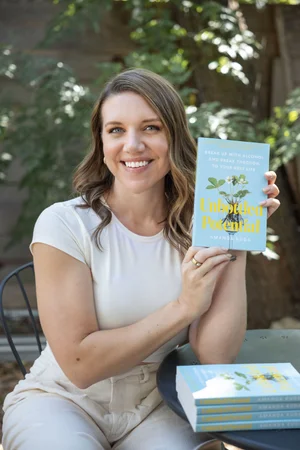
This essay is an excerpt from my best-selling book, Unbottled Potential - go here to keep reading.